
This guide provides general information about natural mosquito repellents and does not constitute professional medical advice. Always consult your GP, pharmacist, or dermatologist before using any new topical product, particularly for children under 3 years, pregnant or breastfeeding women, individuals with known allergies, eczema, or compromised skin barriers. In case of adverse reaction, discontinue use immediately and seek medical attention.
UK Biocidal Products Regulation categorises natural insect repellents alongside synthetic formulations when making efficacy claims, subjecting botanical products to identical safety and performance documentation requirements. This regulatory framework prevents manufacturers from circumventing testing standards simply by declaring plant origin, establishing a level evaluation field where PMD-based formulations earn WHO recognition through demonstrated clinical performance rather than ingredient heritage alone.
The distinction between laboratory efficacy and field protection duration represents the critical gap most consumers underestimate. A repellent demonstrating 95% mosquito deterrence in controlled arm-in-cage trials may deliver 60-90 minutes real-world protection when environmental factors (humidity, perspiration, physical activity) accelerate evaporation rates. Understanding this performance-versus-practicality gap enables realistic product selection aligned with actual usage patterns rather than laboratory ideal conditions that rarely translate to weekend camping or garden activities.
Your natural mosquito protection essentials in 60 seconds
- PMD from lemon eucalyptus delivers 4-6 hour protection comparable to low-concentration DEET (WHO-recognised)
- Citronella requires reapplication every 20-30 minutes – budget time accordingly for outdoor activities
- Verify Soil Association, COSMOS or Ecocert certification to avoid greenwashed ‘botanical’ products containing synthetic additives
- Essential oil concentrations above 10% risk skin reactions – patch test 24 hours before full application
- Children under 3 and pregnant women require conservative formulations or physical barrier methods (clothing, nets)
Why conventional mosquito sprays prompt the search for safer solutions
Three specific chemical concerns dominate consumer hesitation around conventional insect repellents: dermal absorption of DEET (permitted up to 50% concentration in UK formulations), allergic reactions to undisclosed synthetic fragrances listed simply as ‘parfum’, and environmental persistence of compounds that don’t readily biodegrade. The UK Health Security Agency data from March 2026 confirms mosquito-borne disease remains a genuine public health pressure, with 1,629 imported malaria cases diagnosed in 2025 and chikungunya infections rising 43% year-on-year to reach 160 cases.
Specific botanical compounds achieve clinically validated repellent effects that compete directly with synthetic options for duration and efficacy. The reality is more nuanced than ‘chemical bad, natural good’ – some plant-derived ingredients protect for hours whilst others barely last through a garden stroll. The most frequently overlooked factor is protection duration versus reapplication practicality. Assessing suitability means matching product characteristics to your specific scenario: daily garden use differs fundamentally from tropical travel requirements where disease transmission risk escalates dramatically.
43%
increase in UK chikungunya cases during 2025 compared to previous year, confirming mosquito-borne disease as persistent health concern
Proven natural ingredients that genuinely repel mosquitoes
- Daily urban use (garden, park, UK evening walks):
Essential oil blend (citronella + geraniol) – reapply every 60-90 minutes. Certified organic sprays with 5-8% concentration suit low disease-risk environments.
- Weekend camping or countryside expedition:
PMD 20% formulation provides 4-6 hours protection. Combine with permethrin-treated clothing to reduce reapplication burden during outdoor activities.
- Tropical travel (disease-endemic regions):
Medical consultation essential – PMD 30% or consider DEET/Icaridin for high-risk malaria/dengue zones. Natural alternatives acceptable for low-transmission areas only.
- Children under 3 or pregnant women:
Physical barriers prioritised (protective clothing, mosquito netting). Diluted PMD (10%) for children 3+, GP consultation for pregnancy essential.
Natural repellent efficacy operates on a tiered system, with performance gaps between categories as significant as differences between botanical and synthetic options. Categorising by active ingredient rather than vague ‘botanical blend’ descriptions clarifies realistic expectations.
PMD from lemon eucalyptus: the natural heavy-hitter
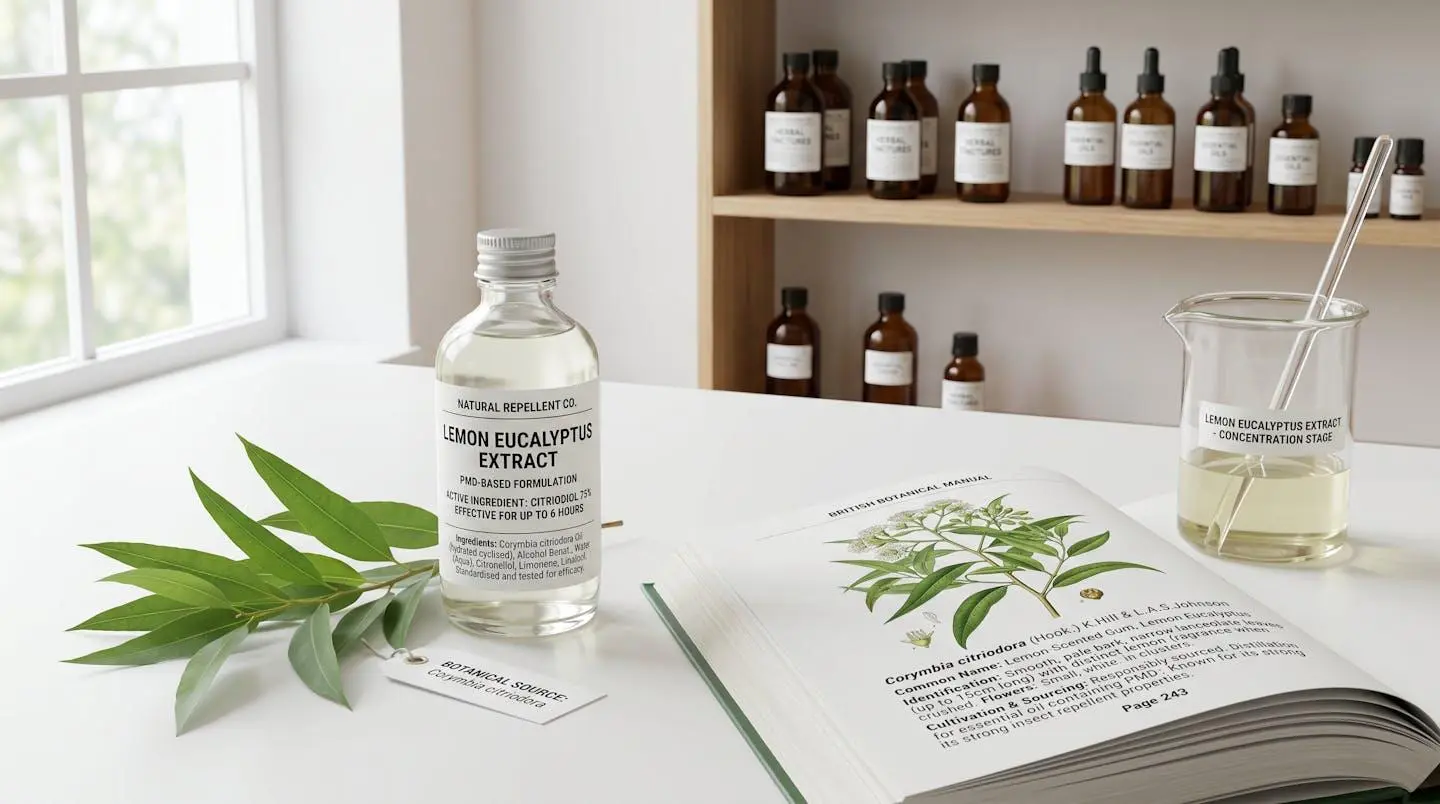
Para-menthane-3,8-diol (PMD) extracted from Corymbia citriodora (lemon eucalyptus) stands alone amongst plant-derived repellents in achieving regulatory recognition comparable to synthetic standards. A systematic review published in Malaria Journal confirms PMD as the only plant-based repellent advocated by the CDC for use in disease-endemic areas. The compound’s molecular structure explains its superior performance: lower vapour pressure translates to reduced evaporation rates, extending skin-surface protection to 4-6 hours at 20-30% concentration. Certified PMD-based mosquito repellent formulations meeting EU biocidal product standards deliver WHO-recognised efficacy whilst maintaining botanical origin credentials.
Essential oil combinations that outperform single ingredients
Volatile monoterpenes face an inherent physics challenge: rapid evaporation rates that limit protection windows to 30-90 minutes. A research published in January 2025 in MDPI Insects reveals geraniol, clove oil and cinnamon oil each protected against mosquitoes for over 60 minutes at 10% concentration, with diminishing returns above 5%. Doubling essential oil percentage from 5% to 10% doesn’t double protection time; it primarily increases skin sensitisation risk without meaningful efficacy gain. Realistic budgeting for essential oil repellents means accepting frequent reapplication every 60-90 minutes as non-negotiable.
Physical and complementary methods worth combining
Permethrin-treated clothing delivers protection through an entirely different mechanism: the synthetic pyrethroid bonds to fabric fibres, killing or repelling insects on contact rather than requiring skin application. WHO approval for malaria prevention reflects field data showing treated garments maintain efficacy through 6+ wash cycles. Critical safety distinction: permethrin suits fabric treatment exclusively, never direct skin contact. Mosquito netting, long-sleeved loose-weave clothing and habitat modification function as force-multipliers. Integrated strategies combining PMD or essential oil topical application with physical barriers outperform any single-method approach.
| Active ingredient | Protection duration | Reapplication frequency | Regulatory approval | Contraindications |
|---|---|---|---|---|
| PMD (Citriodiol) 20-30% | 4-6 hours | 2-3 times daily | WHO-recognised, UK BPR approved | Not for children under 3 years |
| Citronella oil 5-10% | 20-30 minutes | Every 30-60 minutes | Generally recognised as safe (GRAS) | Skin sensitisation risk, patch test advised |
| Geraniol + Clove blend 8% | 60-90 minutes | Hourly outdoors | EU cosmetic regulation compliant | Avoid during pregnancy (clove oil), not for infants |
| Lavender oil 5% | 30-45 minutes | Every 45-60 minutes | Cosmetic ingredient (limited repellent data) | Minimal – mild sedative effect in high doses |
| Permethrin (clothing treatment) | Through 6+ wash cycles | Reapply after 6 washes or monthly | WHO-approved for malaria prevention | Fabric application only – never on skin, toxic to cats |
Safe application guidelines for different age groups
Natural ingredient status doesn’t confer automatic safety across all populations. Essential oils concentrate bioactive compounds achieving insecticidal effects through mechanisms that can equally irritate human skin or trigger allergic responses. Age-stratified guidance reflects developmental vulnerabilities: thinner skin in children increases dermal absorption rates, immature enzyme systems in infants reduce capacity to metabolise absorbed compounds, and physiological changes during pregnancy alter toxicokinetic profiles.
Adults and teenagers: concentration thresholds that matter
For individuals over 12 years with intact skin, essential oil formulations up to 10% total concentration generally fall within established safety margins, though 5-8% represents optimal risk-benefit balance. Patch testing protocol remains non-negotiable: apply a small amount to inner forearm, observe for reactions at intervals over the following day. Avoid application to damaged skin, near eyes and mucous membranes, or immediately before UV exposure for oils with known phototoxic potential.
Children aged 3-12: adjusted formulations and supervision needs
Paediatric formulations differ from adult products in concentration limits rather than ingredient categories. PMD becomes appropriate from age 3 onwards at reduced concentrations (10-20% versus adult 20-30%). Supervision during application ensures appropriate coverage without excess: thin, even distribution to exposed skin only, avoiding hands that frequently contact face and mouth. Product labelling stating ‘suitable for children’ without age specification warrants scepticism – legitimate paediatric formulations specify minimum age thresholds based on ingredient safety profiles.

Consider Sarah, a parent preparing for a family camping trip in the Lake District. Initially hesitant about natural repellents’ efficacy, she consulted her pharmacist who recommended a PMD 20% formulation for herself and her partner, combined with diluted 10% PMD for their 5-year-old daughter. She conducted patch testing on each family member the day before departure, applied permethrin treatment to their outdoor clothing following manufacturer instructions, and packed mosquito netting for evening protection around their tent. The integrated approach delivered reliable protection throughout their weekend expedition whilst maintaining her preference for natural ingredient profiles. Her daughter experienced no skin reactions, and the family required only one midday reapplication during their longest countryside walk.
Infants and pregnant women: conservative approaches that protect
For infants under 3 years, physical protection methods take absolute priority over topical chemical exposure of any origin. Mosquito netting over prams and cots, long-sleeved bodysuits in fine-weave cotton, and indoor protection during peak biting hours eliminate most exposure risk in UK contexts. Pregnancy introduces dual considerations: maternal safety and foetal exposure via placental transfer. Conservative medical guidance defaults to physical barriers as first-line protection, reserving topical repellents for scenarios where bite prevention outweighs theoretical exposure risks – typically tropical travel to disease-endemic regions.
Critical safety considerations before applying natural repellents
- Natural does not automatically mean risk-free – essential oils can cause skin irritation or allergic reactions in sensitive individuals
- Efficacy varies significantly depending on concentration, formulation, and environmental conditions
- Reapplication frequency is generally higher than with chemical alternatives (DEET, Icaridin)
- Some natural ingredients are contraindicated for infants, young children, and pregnant women
- Consult your GP, pharmacist, or dermatologist before use if you have sensitive skin, allergies, or existing skin conditions
Distinguishing genuinely natural products from greenwashed imposters
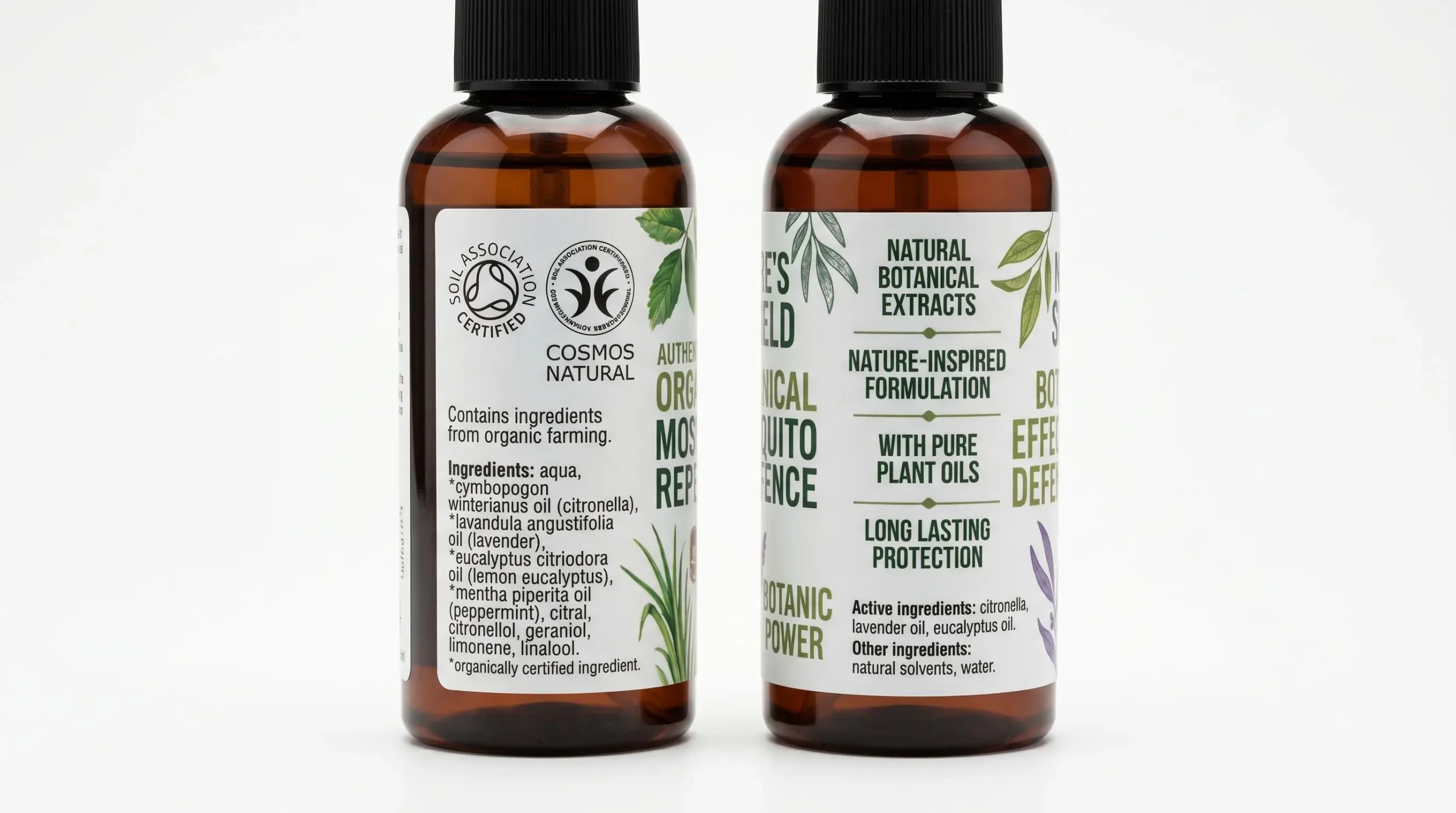
The term ‘botanical’ carries no regulatory definition in UK consumer law, permitting products containing minimal plant extracts alongside synthetic fragrance compounds and petroleum-derived carriers to claim botanical credentials. Market analysis reveals certification as the sole reliable verification mechanism. Third-party auditing by recognised bodies (Soil Association, COSMOS, Ecocert) imposes ingredient purity standards and annual inspection requirements that self-declared ‘natural’ claims entirely circumvent.
The Soil Association organic standard prohibits synthetic pesticides, artificial fragrances, parabens, and petroleum-derived ingredients whilst mandating minimum percentages of certified organic content. COSMOS Natural certification permits some non-organic natural ingredients but maintains strict synthetic ingredient exclusions. Ingredient transparency separates legitimate manufacturers from those exploiting regulatory loopholes – complete INCI listings in descending concentration order enable informed comparison.
- Check for recognised certification logos: Soil Association, COSMOS Natural/Organic, Ecocert, or EU Organic Leaf
- Read full ingredient list (not just marketing claims) – verify absence of ‘parfum’, ‘fragrance’, mineral oil, paraffin, or synthetic preservatives
- Confirm active ingredient concentration is specified numerically (e.g., ‘PMD 20%’ not just ‘contains lemon eucalyptus’)
- Verify manufacturer transparency: identifiable company address, contact details, batch number traceability
- Cross-reference certification claims on certifier’s official database (Soil Association searchable register, COSMOS approved products list)
Price positioning offers circumstantial evidence: certified organic formulations incur higher raw material costs, certification fees and compliance documentation expenses that typically translate to retail prices 40-80% above conventional alternatives. Products claiming ‘organic’ status whilst undercutting certified competitors’ pricing warrant investigation.
Frequently asked questions about natural mosquito protection
Are natural mosquito repellents genuinely as effective as DEET sprays?
PMD-based formulations (20-30% concentration) demonstrate efficacy comparable to low-concentration DEET (10-15%), providing 4-6 hours protection. However, most essential oil blends require reapplication every 30-90 minutes. For disease-endemic travel where maximum protection duration is critical, medical professionals may still recommend DEET despite eco-preference.
Can I make effective mosquito repellent at home using essential oils?
Whilst DIY formulations are technically possible, achieving safe and effective concentrations requires precise measurement. Risks include over-concentration (causing skin reactions) or under-dilution (rendering product ineffective). Certified products undergo stability testing and efficacy validation that home preparation cannot replicate. If attempting DIY, never exceed 5% total essential oil concentration.
Which natural repellent ingredients are genuinely safe for my toddler?
Children under 3 years present the highest safety consideration priority. PMD formulations are contraindicated below age 3. Safest approach for toddlers: physical protection methods prioritised (loose long-sleeved clothing, mosquito netting on prams). If topical application essential, use only products explicitly labelled for age 2+ with paediatrician approval.
What do ‘botanical’ and ‘plant-derived’ actually mean on product labels?
These marketing terms lack regulatory definition in UK consumer law and frequently signal greenwashing. ‘Botanical’ may describe products containing minimal natural extracts alongside synthetic fragrance and petroleum carriers. Only third-party certifications (Soil Association, COSMOS, Ecocert) guarantee ingredient authenticity through independent audit. Verification rule: ignore vague botanical claims and verify presence of recognised certification logo.